The first meeting
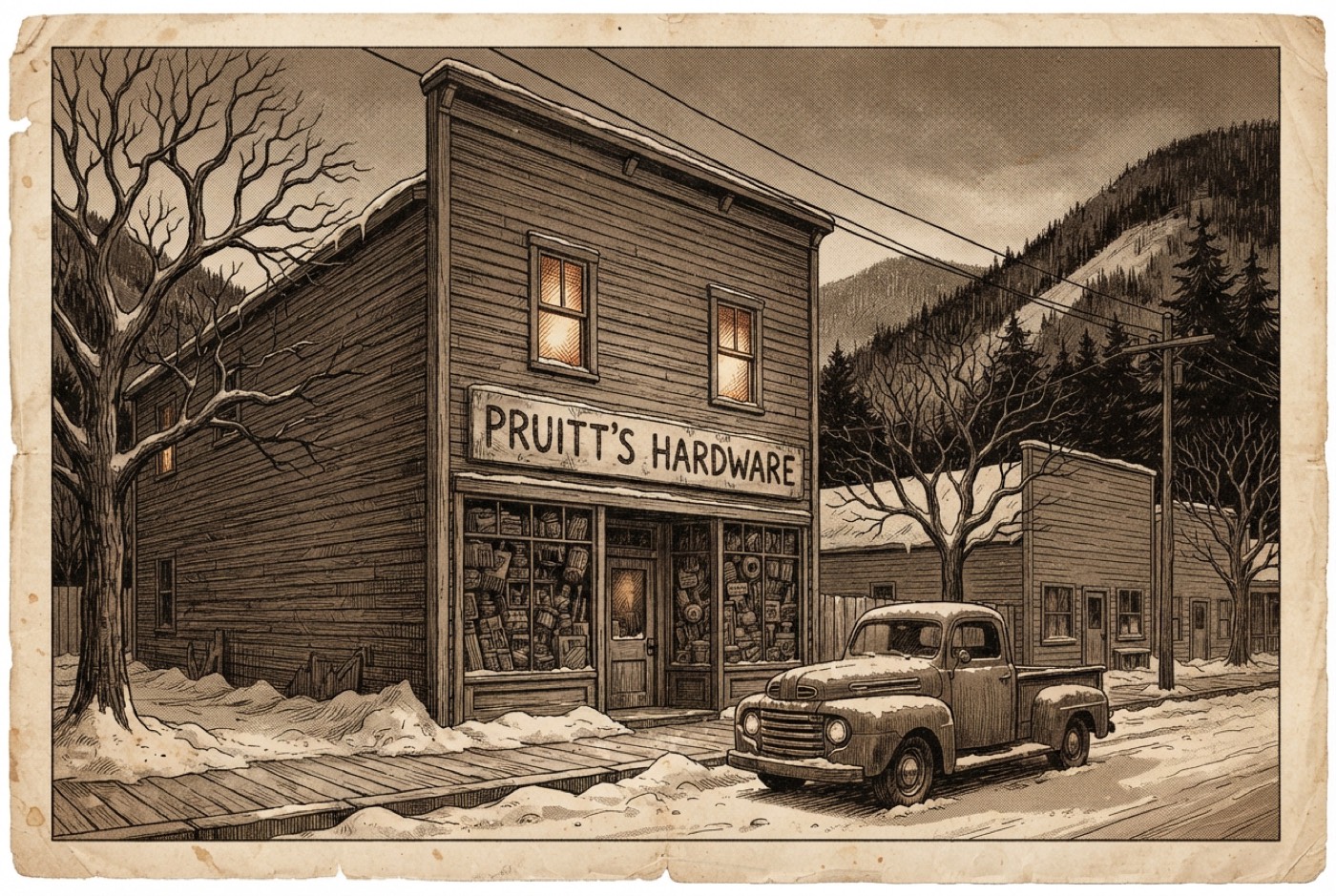
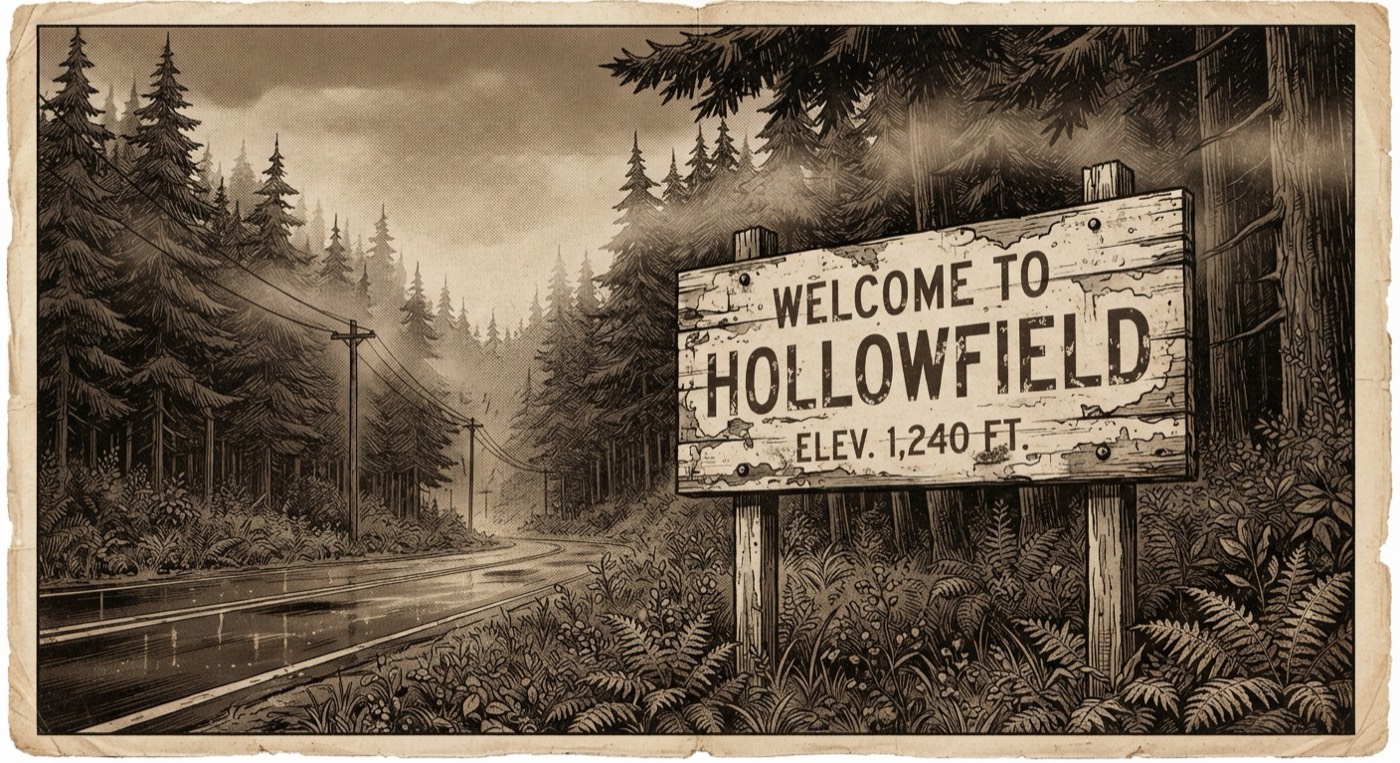
Hollowfield is a town of about three thousand people in the Cascade foothills, two hours from Seattle if the pass is open. It has a mill that closed, a mill that reopened, and a hardware store that outlasted both.
On the evening of Saturday December 19, 1953 the room above that hardware store was lent out for a meeting. It was not advertised. Ada Merrick, who taught the fourth grade, had spent four years writing down other people's accounts in a school exercise book, and by that winter she had thirty-one of them and no idea what she was supposed to do next.
So she wrote to everybody whose name was in the book and asked them to come.
Eight came. Three more turned up who had not been invited, including a sixteen year old who had heard about it queuing at the counter downstairs.
The minutes record that the meeting was cold, that Walt Pruitt brought a coffee urn from the shop floor, and that for the first forty minutes almost nobody said anything at all.
What was actually discussed
Very little, at first. These were people who had each been told, separately and in most cases kindly, to stop talking about the thing that had happened to them. A room full of them did not immediately produce conversation.
Ada read three accounts aloud from the exercise book without naming anybody.
Then, according to the minutes, "Mr. D. asked whether the woman in the second account had also noticed the dogs." Nobody in the room had told him about the dogs. It was not in what Ada had read.
The meeting went on until nearly midnight.
What they agreed
Four things, and the Institute still runs on them.
Write it down the same night. Beatrice Cobb had done exactly that seventeen days earlier and her four pages contained details she could not have recalled by the following weekend, including several she had not thought were important.
Record it exactly as given. Walt Pruitt's rule. An account is not corrected, not tidied, and not improved. If somebody says the thing was eleven feet tall, the file says eleven feet tall.
Say when there is an ordinary explanation. Dr. Whitaker joined that night as the loudest sceptic in the room and stayed one for thirty one years. Most reports have a mundane answer. The Institute's credibility rests on being the first to say so.
Keep everything. Including the accounts that turn out to be nonsense, the ones that get withdrawn, and the ones nobody believes. Especially those.
What it became
Seventy years later the Institute holds the largest independent archive of its kind in the country. It takes no government funding and never has. It is supported by its members, it publishes one field guide, and it has never claimed to have proved anything.
It has also never thrown a report away.